What Is Hemorrhoid?
Hemorrhoids (also called piles) are swollen and inflamed veins in the lower rectum or anus, similar to varicose veins.
- Internal Hemorrhoids
- External Hemorrhoids
Hemorrhoid Symptoms
Although everyone has hemorrhoidal tissue, only about 5% of people develop symptoms related to their hemorrhoids, and only a small percentage of those cases ever require surgical treatment. Symptoms may arise from internal hemorrhoids,external hemorrhoids, or both.
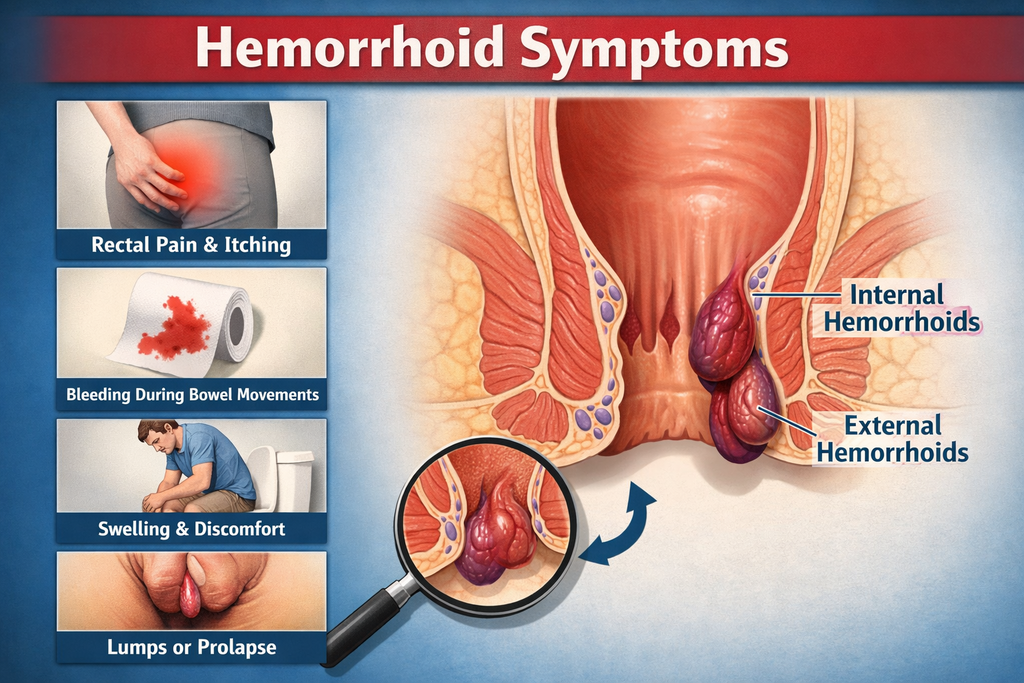
Symptoms
-
Rectal pain & Itching
-
Bleeding During Bowel Moments
-
Swelling & Discomfort
-
Lumps or Prolapse
Internal Hemorrhoids
Internal hemorrhoids originate inside the rectum, above the dentate line. Common symptoms include painless rectal bleeding and prolapse, which is tissue that bulges out of the anus. Prolapsed tissue may be noticed during wiping or bowel movements and often returns inside on its own or can be gently pushed back. Symptoms usually develop gradually and may come and go.
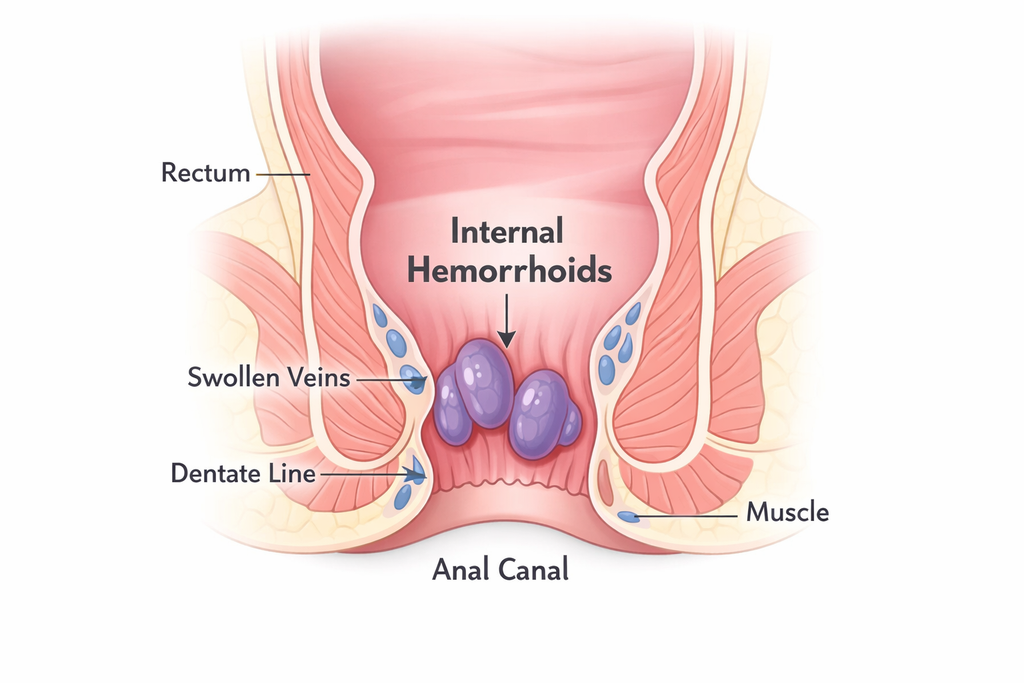
Internal Hemorrhoid Grading
-
Grade I : No prolapse
-
Grade II : Prolapse that goes back in on its own
-
Grade III : Prolapse that requires manual reduction
-
Grade IV : Prolapse that cannot be reduced and is often painful
External Hemorrhoids
External hemorrhoids develop just outside the anus and may appear as a painful, bluish lump. They can occur suddenly and are sometimes associated with straining. A blood clot (thrombosis) may form inside an external hemorrhoid, causing sudden and sometimes severe pain. In some cases, the skin may open and allow the clot to drain
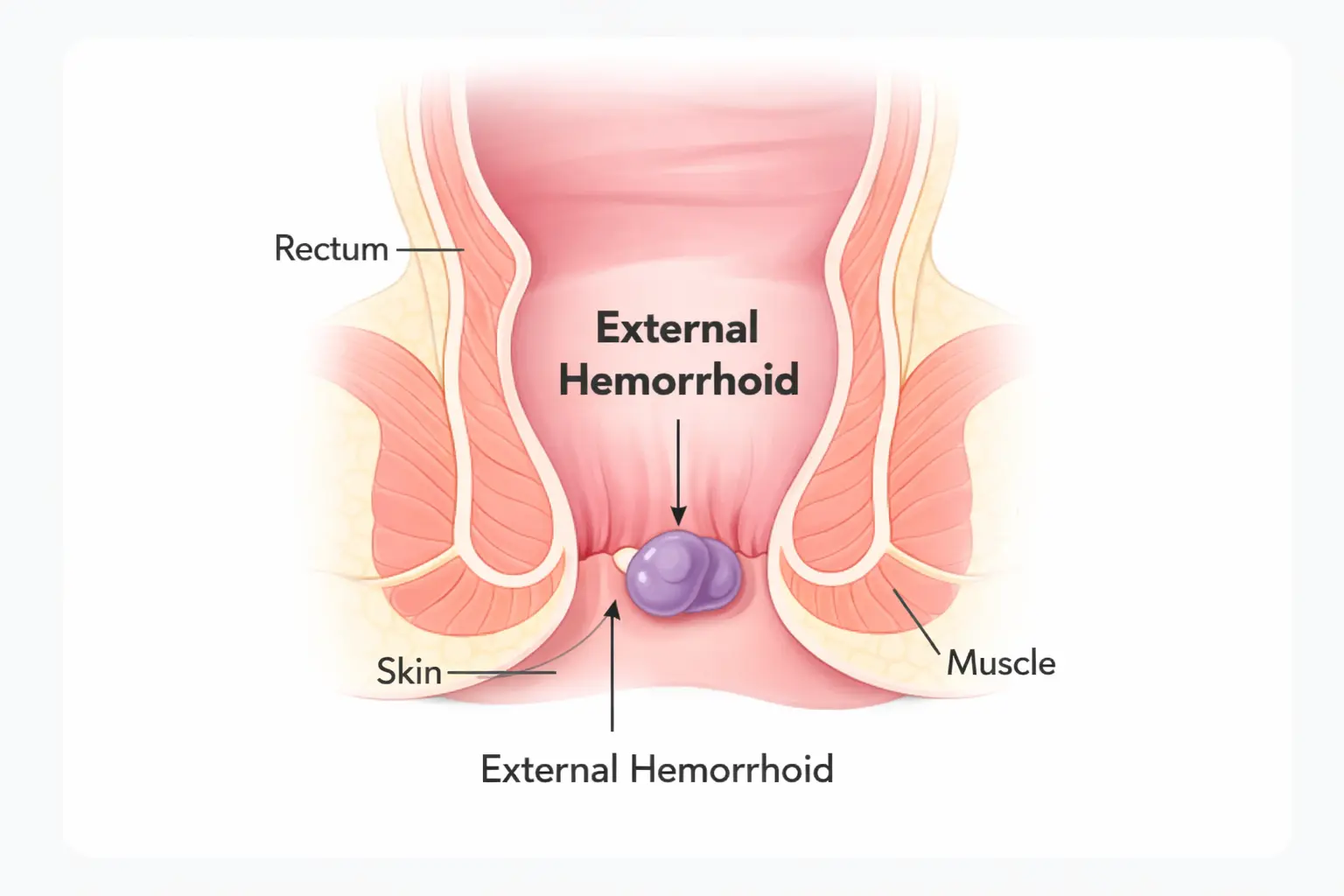
External hemorrhoids may also cause:
-
Swelling
-
Pressure
-
Intermittent discomfort
Treatment Options
Understand the Condition. Explore Safe & Effective Treatment Options.
- Accurate information
- Patient-friendly explanations
- Trusted treatment guidance
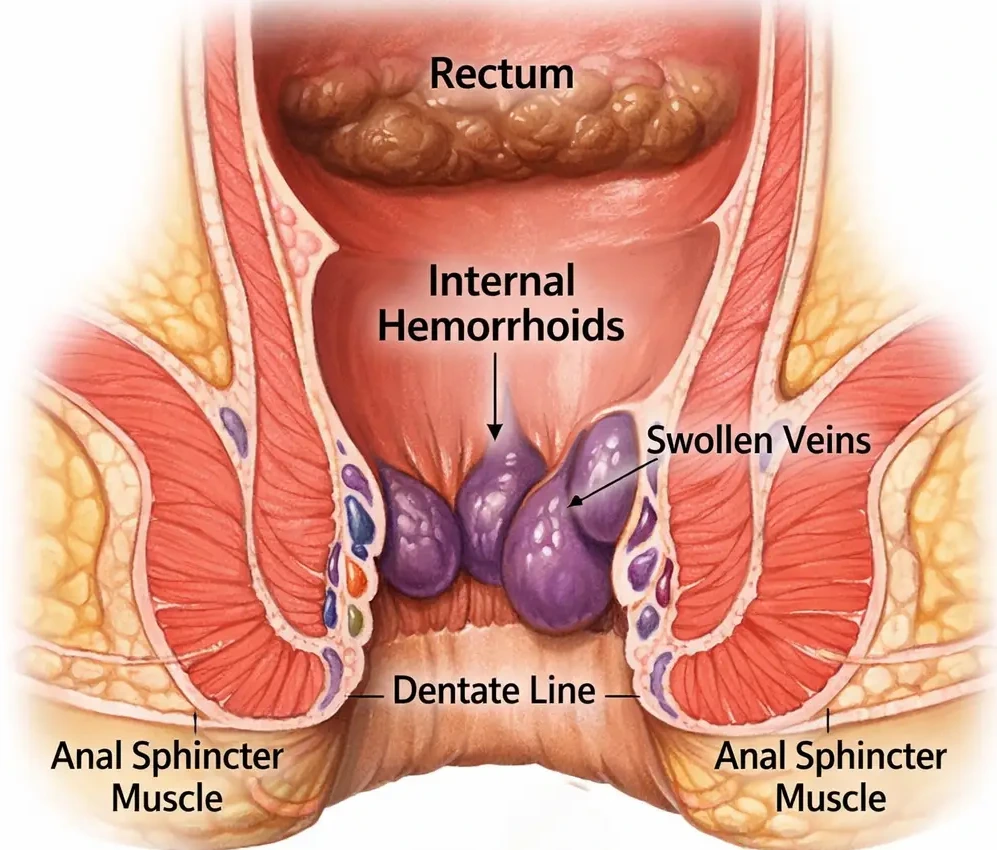
Internal Hemorrhoid
Painless rectal bleeding or the prolapse of anal tissue is commonly associated with symptomatic internal hemorrhoids....
Read More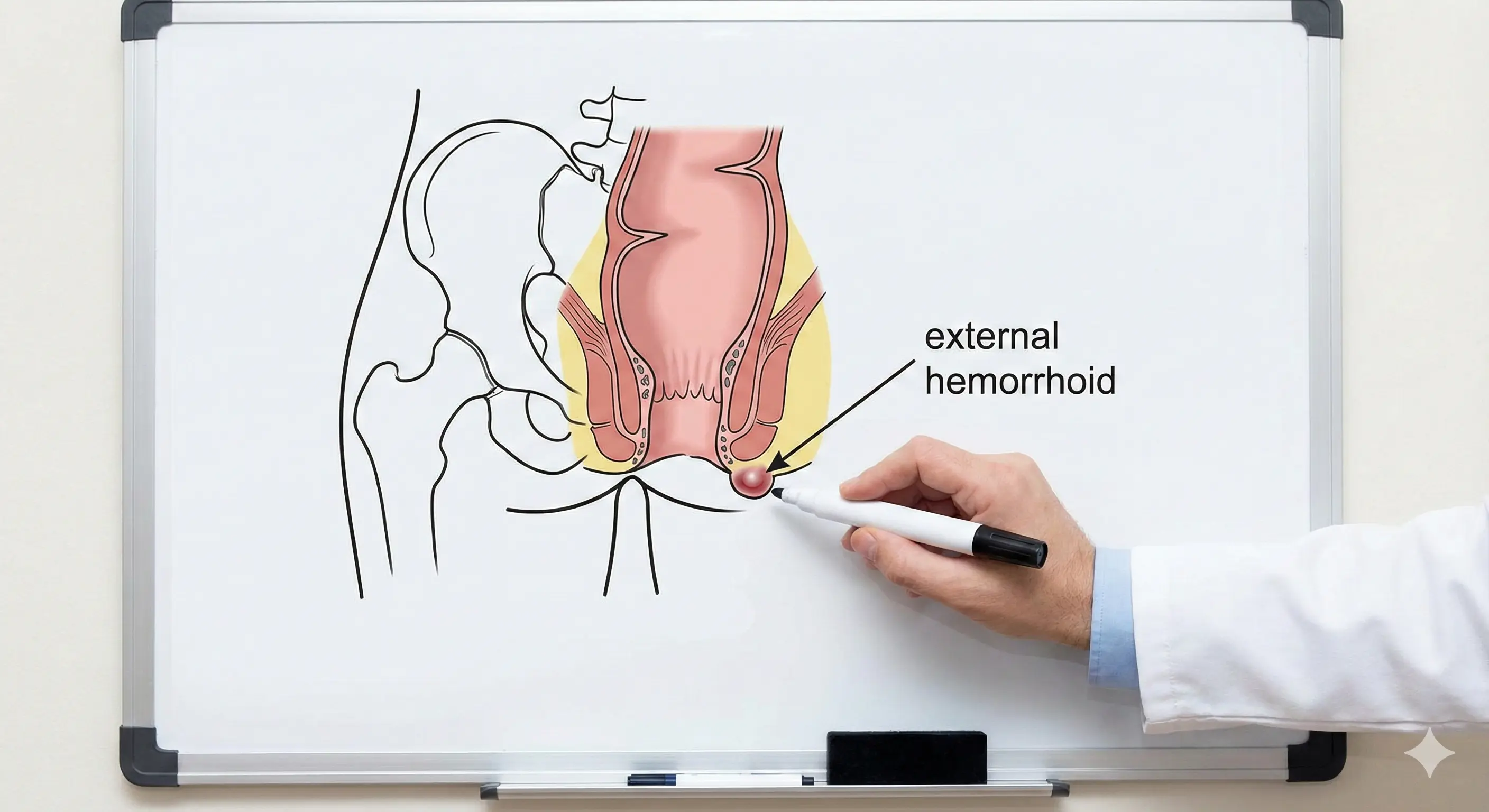
External Hemorrhoid
External hemorrhoids are swollen veins located around the anus and lower rectum. Unlike internal hemorrhoids, which d...
Read More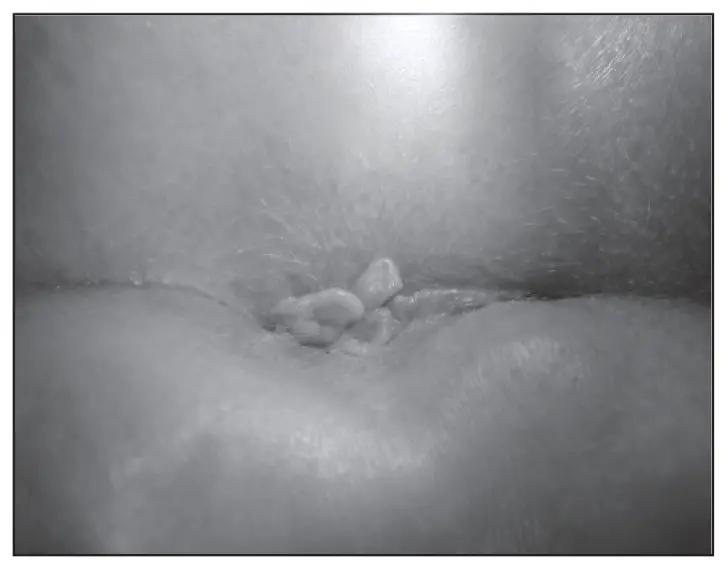
Anal Skin Tags
Anal skin tags are harmless, flesh-colored growths around the anus that commonly develop after conditions like hemorr...
Read MoreAnal Fissure
An anal fissure is a small tear in the skin at the anus that causes sharp pain and bright re...
Read MoreConstipation
How common is it?
Constipation affects about 15% of Americans. Most cases are simple,... Read MorePruritis Ani (Itchy Anus)
Pruritis ani means “itchy anus” in Latin. It causes irritation of the skin around the anus, leading to a strong urge ...
Read MoreBook Your Appointment
Select a Doctor
Select Date & Time
Select a Branch
Scottsdale
Click to select this branch
Peoria
Click to select this branch